
Quality Scuba Diving in Tenerife: Quantity vs Quality
A strong read for divers who care about training quality. Approx. 11 min read.
In scuba diving, a certification card is only the beginning. The real question is what kind of diver stands behind that card.
At Aquarius Dive Center Tenerife, we believe divers should be trained for the future, not only for the course they are doing today. A good course should build confidence, control, awareness and safer habits that stay with you long after the paperwork is finished.
This is why we choose quality over quantity.
Not because diving should become serious, boring or complicated. Diving should be fun. It should feel exciting, relaxed and unforgettable. But the best fun underwater comes when a diver feels safe, comfortable and in control.
After more than 35 years in the diving industry, with experience from the Netherlands, the North Sea, Romania, the Black Sea and now Tenerife, we have seen diving in many forms. Cold water, poor visibility, wreck diving, technical diving, beginner training, professional training and holiday diving. Different places. Different divers. Different conditions.
And one thing has always stayed the same:

This Is Our View as a Dive Center
This blog is not written to attack other dive centers. There are excellent dive centers and instructors around the world, and bigger does not automatically mean bad. A well-organized dive center with professional instructors, good standards and real care can do a great job.
But we have also seen the other side.
We have seen what happens when scuba diving becomes a numbers game. Large groups. Rushed courses. Minimum attention. Students pushed through because the schedule says they must be finished. Divers leaving with a card, but not always with the confidence, awareness or skill level they really need.
That is not how we believe diving should be taught.
Aquarius Dive Center is a PADI 5-Star IDC and TecRec Center in Tenerife. We were the first PADI TecRec Center in Tenerife, and we have built our reputation around small groups, strong standards, Scubapro-quality equipment, safety, fun and personal attention.
Diving Is Not a Factory Product
One of the biggest problems in the diving industry is the idea that training can be treated like a production line.
More students.
More certifications.
More turnover.
Less time per person.
On paper, the students may meet the minimum requirements. But underwater, minimum is not always enough.
A diver can pass a skill once and still not be confident with it. A diver can finish a course and still struggle with buoyancy. A diver can receive a certification card and still not understand how to prepare equipment properly.
That matters.
Because diving is not only about completing exercises. It is about becoming comfortable enough to dive safely, calmly and with awareness.
Small Groups Change Everything
Small groups are not just a luxury. In diving, they make a real difference.
Every diver learns differently. One student may need more time with mask skills. Another may struggle with buoyancy. Someone else may be nervous but tries to hide it. In a large group, these details are easier to miss.
In a small group, the instructor can actually see the diver.
That means better feedback, better control and a much better learning experience. Problems are corrected earlier. Bad habits are stopped before they become normal. Nervous students feel supported instead of lost in the group.
The Problem With “Just Enough”
There is a big difference between doing something properly and doing just enough.
Just enough to pass.
Just enough to finish.
Just enough to get the card.
That may work for a checklist, but it does not build strong divers.
In scuba diving, “just enough” can show up later in many ways. Poor buoyancy. High air consumption. Stress underwater. Bad trim. Weak equipment handling. Lack of awareness around marine life. Dependence on others for basic dive preparation.
These things are not small details. They affect safety, enjoyment and the way a diver behaves underwater.
Bad Habits Travel Further Than People Think
One poorly trained diver is already a problem. But when that diver becomes a Divemaster, assistant or instructor later, weak habits can travel further.
This is how quality problems continue in the industry.
If someone learns rushed skills, poor buoyancy, weak demonstrations or careless habits, and nobody corrects them, those habits can be passed on to the next generation of divers.
We have spent decades in diver training, professional-level education and technical diving, and we know how important the foundation is. Harry’s background includes staffing IDC candidates multiple times at the IT College, former PADI European College, owned by PADI Europe, as well as years of instructor-level training, technical diving and real-world dive center experience.
This is especially true when divers move beyond beginner level into advanced training, rescue, Divemaster, instructor development or TecRec diving.
The higher you go, the more your foundation matters.
Equipment Knowledge Is Part of Safety
One of the clearest signs of weak training is when certified divers do not understand their own equipment.
For a beginner, needing help is completely normal. Everyone starts somewhere. But when experienced divers still cannot set up their equipment correctly, connect a BCD properly, position a regulator correctly or spot basic setup mistakes, that usually points back to training that was too passive or too rushed.
A good dive center should not create dependent divers.
Of course, we help our divers whenever needed. That is part of good service. But our goal is not to do everything for the diver forever. Our goal is to help divers understand what they are doing and why it matters.
Aquarius has a strong background in dive equipment, maintenance, repair and Scubapro equipment knowledge. That experience shapes the way we look at training. Equipment is not just something you wear. It is life-support equipment, and divers should learn to respect it.
Trim and Buoyancy Are Not Small Skills
Buoyancy is one of the most important skills in scuba diving, but buoyancy alone is not the full story.
A diver can hold depth and still have poor trim. A diver can stay off the bottom and still swim inefficiently, fight their position or disturb the water around them. True control comes when buoyancy and trim work together.
Good buoyancy keeps you where you want to be. Good trim makes the rest of the dive feel easier, cleaner and more controlled.
Together, they improve air consumption, reduce stress, protect the underwater environment and make diving much more enjoyable. They also improve positioning, photography, buddy awareness and comfort in the water.
Poor buoyancy and poor trim create problems everywhere. Divers hit the bottom, stir up sand, waste energy, damage fragile marine life and often feel less relaxed underwater.
This is why we believe trim and buoyancy deserve serious attention.
At Aquarius Dive Center, we developed our own XTend on TB Trim and Buoyancy course over many years of training divers. It is a 3-day, 5-dive small-group program created to go far beyond a standard PADI Peak Performance Buoyancy specialty.
The goal is not simply to “improve buoyancy a little.” The goal is to help divers build real control, a better horizontal position, cleaner movement and a completely different feeling underwater.
Diving Is Not About Collecting Cards
We understand the excitement of learning. Diving has many great courses and specialties, and continuing education can open the door to deeper dives, wrecks, sidemount, Nitrox, technical diving and much more.
But a certification card should mean something.
It should represent real ability, not only attendance.
Some divers become focused on collecting as many cards as possible, as quickly as possible. But if a course does not improve your skills, confidence, understanding or safety, then the card alone has very little value.
At Aquarius, we prefer motivated students who want to learn properly. We do not want to sell certifications as souvenirs. We want each course to make you a better diver.
That is also why our training style changes as divers progress. Beginner experiences should feel simple, safe, relaxed and fun. Advanced training should add more precision. Professional and technical training should demand a higher level of control, awareness and discipline.
The goal is always the same:
Quality Training Also Protects the Ocean
Better divers are better for the underwater world.
A diver with good buoyancy and good awareness is less likely to touch the bottom, damage marine life or disturb animals. Responsible diving starts with proper training and good habits.
At Aquarius, we care about the ocean we dive in. We collect underwater trash when possible, we are involved in PADI Adopt the Blue, and we guide divers to avoid touching, chasing or feeding marine life.
We are guests underwater.
That attitude matters.
Tenerife has beautiful Atlantic underwater landscapes, volcanic rock formations, blue water, rays seen regularly, seasonal angel shark possibilities and marine life that can surprise you on any dive. But the ocean is not a theme park. It is the animals’ home.
Good divers understand that.
Why This Matters in Tenerife
Tenerife is a fantastic place to dive. Warm holiday atmosphere, Atlantic water, volcanic underwater scenery and a wide range of dive sites make it attractive for beginners, certified divers and experienced divers.
But because Tenerife is also a popular holiday destination, there is always pressure to do things quickly.
Quick courses.
Quick certifications.
Quick schedules.
Quick turnover.
We understand the reality of tourism. People are on holiday. Time matters. But quality still matters more.
A diver who has only a few days in Tenerife still deserves proper training. A beginner doing a first dive deserves calm guidance and personal attention. A certified diver joining guided dives deserves safe organization and a professional team. A student starting a course deserves more than a rushed checklist.
Our Choice as Aquarius Dive Center
Every dive center makes choices.
How many people to take.
How much time to give.
How much attention to provide.
How seriously to treat standards.
How much to invest in equipment.
How much to care after the booking is paid.
Our choice is clear.
We choose small groups where possible.
We choose proper equipment.
We choose experienced professionals.
We choose honest feedback.
We choose safety, quality and fun.
We choose divers over numbers.
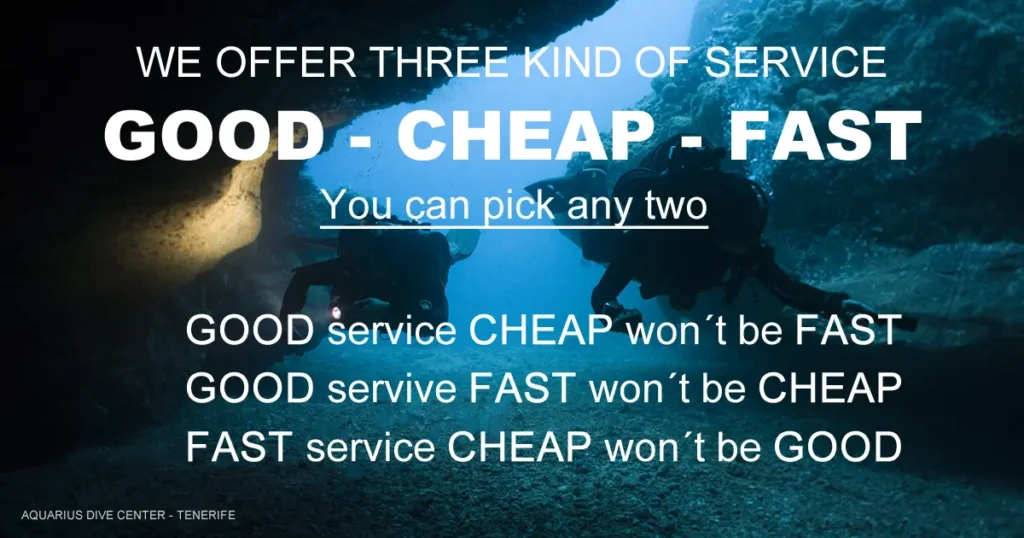
That does not mean we are the right dive center for everyone. If someone only wants the fastest or cheapest option, Aquarius may not be the best fit.
But if you want to dive with a team that cares about how you develop, how you feel underwater and how you continue as a diver, then this is exactly what we stand for.
Final Thoughts: Quality Comes First
The debate between quantity and quality in scuba diving is not only about numbers. It is about attitude.
A dive center can treat diving as a production line, or it can treat every diver as someone who deserves time, attention and proper training.
We choose the second way.
After decades in diving, we are more convinced than ever that quality training creates safer, more confident and happier divers. It also creates divers who enjoy the underwater world more and treat it with more respect.